


What Are the Differences Between Goalie Gloves for Different Weather Conditions?
Feb 1
4 min read

Weather plays a much bigger role in goalkeeping performance than most players and parents realize. Temperature, moisture, and field conditions all affect how a goalkeeper glove performs—particularly the latex, grip, comfort, and durability. Wearing the wrong goalkeeper gloves for the conditions can lead to poor handling, faster wear, and unnecessary frustration.
Understanding how goalie gloves behave in dry, wet, cold, and hot conditions helps goalkeepers make smarter choices and get the most out of their equipment. Below, we break down the key differences and what to look for in each environment—along with how Prime Focus Goalkeeping gloves are designed to perform consistently across real-world conditions.
Dry Weather Gloves: Maximum Grip, Controlled Feel
Dry conditions are where most goalkeeper gloves perform at their best. Latex is naturally tacky in warm, dry weather, which allows for confident catching, clean handling, and strong ball control. Oftentimes, it makes sense to slightly wet your goalkeeper gloves to activate the latex and best prepare them for performance. This is why you see a lot of goalkeepers spit on their goalie gloves before and during play. It can be one of the differences between goalie gloves; how they absorb liquid.
In dry conditions, goalkeepers should prioritize:
Balanced grip that rewards proper technique
Good palm contact and feel
Comfort for long training sessions
While many goalkeeper glove companies advertise extreme grip for dry weather, most latexes perform well in dry conditions—especially for youth goalkeepers. Development-focused goalkeeper gloves aim for controlled grip, allowing keepers to feel the ball properly rather than relying on stickiness alone.

Wet Weather Gloves: Grip Under Pressure
Wet weather conditions is often the cryptonite for a lot of goalkeepers. Goalkeeper glove grip is often a lot easier in dry conditions than in wet. Rain is where goalkeeper glove differences become most noticeable. Moisture reduces friction between the ball and the latex, making handling more challenging and mistakes more costly.
Gloves designed for wet conditions often feature:
Softer latex compounds that activate with moisture
Deeper palm texture to channel water away
Improved ball contact when surfaces are slick
Some goalkeeper glove brands label this as Aqua, Rain, or Wet Weather latex. While these latexes can be very effective, they also tend to wear faster and require more maintenance.
For youth goalkeepers, the priority in wet conditions is predictable grip and confidence. Ultimately, your technique is going to determine your success in wet weather conditions but your goalkeeper gloves can go a long way to supporting your technique. Our Locus Pro Aqua goalkeeper gloves are some of the best wet weather goalie gloves on the market. Designed to perform in the worst conditions, they are both aesthetically pleasing and durable.
Cold Weather Gloves: Feel vs. Protection
Cold temperatures significantly impact latex performance. As temperatures drop, latex stiffens, reducing grip and ball feel. This is one of the most common reasons goalkeepers struggle in winter matches and training sessions. These conditions are definitely a time to focus on keeping the goalkeeper gloves moist throughout the game.
Cold-weather considerations include:
Softer latex that remains flexible in lower temperatures
Gloves that allow good hand mobility despite layering
Warmth without excessive bulk
Some goalie gloves add insulation or thicker backhands, but too much padding can reduce touch and control. For youth goalkeepers especially, maintaining feel and confidence is more important than extreme warmth. Our Locus Pro line of goalkeeper gloves are designed with thicker material to provide the warmth and support goalkeepers need in these conditions.`

Hot Weather Gloves: Breathability & Comfort
In hot conditions, the challenge isn’t grip—it’s sweat. Excess moisture inside the glove can cause slipping, discomfort, and distraction. Goalkeeper gloves designed with the right materials can make playing in these conditions more comfortable.
Hot-weather goalkeeper glove features should include:
Breathable backhand materials
Lightweight construction
Secure wrist closure to manage sweat movement
Goalkeeper glove latex grip usually performs well in heat, but comfort becomes the limiting factor. Goalie gloves that trap heat and moisture can quickly become unusable during summer sessions. We have a number of goalkeeper gloves that were built with breathable mesh on the backhands to ensure comfort and flexibility for goalkeepers. Our Prime Focus R.E.D. training goalkeeper gloves are the perfect example.
Turf vs. Grass: How Weather Interacts With Surfaces
Weather and surface go hand in hand. Wet turf, dry artificial surfaces, muddy grass, and frozen ground all affect how goalkeeper gloves wear and perform. Goalkeeper glove care is also a huge part of goalkeeper glove performance, regardless of the conditions. Learn how to properly care for your goalkeeper gloves HERE.
Key considerations:
Turf accelerates palm wear, especially in dry conditions
Wet grass increases abrasion and moisture exposure
Cold turf hardens latex even faster
For youth goalkeepers who train year-round on mixed surfaces, durability matters just as much as grip. Prime Focus Goalkeeping gloves are built with training-friendly durability, making them suitable across weather and surface combinations.
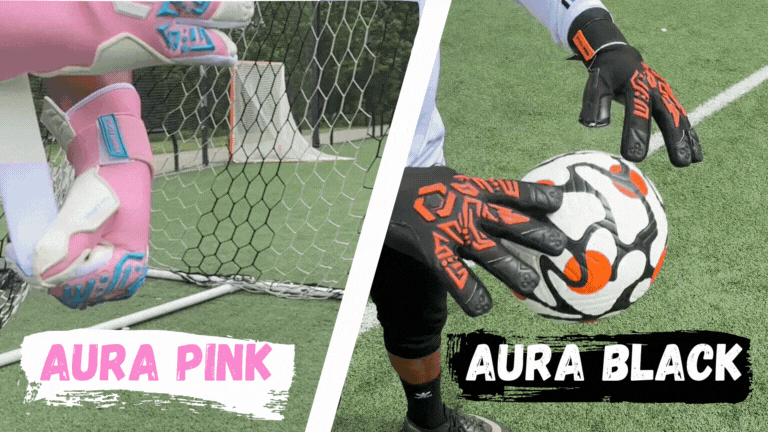
One Pair or Multiple? What Youth Goalkeepers Actually Need
Professional goalkeepers often carry multiple pairs of goalkeeper gloves for different conditions, but that’s not always realistic—or necessary—for youth players. If possible, rotating goalkeeper gloves between training and games is ideal for durability.
Most youth goalkeepers are best served by:
One reliable, all-around training and match glove
Latex that performs consistently across conditions
A focus on development rather than specialization
We offer training goalkeeper gloves that are designed specifically for the demands of goalkeeper training and are priced to make them affordable and accessible. Check out our full line of goalkeeper gloves in our online shop now!
Final Thoughts
Weather affects every aspect of goalkeeper glove performance—from goalkeeper glove grip and comfort to durability and confidence. Understanding how goalie gloves behave in dry, wet, cold, and hot conditions allows goalkeepers to make smarter choices and avoid unnecessary frustration.
Rather than chasing extreme, condition-specific features, youth goalkeepers benefit most from gloves that offer consistency, feel, and durability across all environments. That philosophy is at the core of Prime Focus Goalkeeping gloves—built for real training, real matches, and real development.
Head over to our Amazon Storefront to see all of our BEST goalkeeping recommendations for both on and off the field. You can also head over to our online shop to see our entire line of goalkeeper gloves, apparel, and FREE resources. Be sure to follow us on all of our social media pages: Facebook, Twitter, TikTok, Instagram, Pinterest, and YouTube.


Comments